4. Collecting health inequality data
Key findings
Population-based health surveys are a common data source for inequality monitoring across most countries, generally including key inequality dimensions such as age, sex, economic status, education, place of residence and subnational region.
Birth registration data enable disaggregation by sex and subnational region in 87% of countries (123 of 142) and death registration data by age, sex and subnational region in 81% of countries (114 of 140). Other inequality dimensions, such as economic status and education, are captured less systematically. Data collection that enables disaggregated reporting was more common in high-income countries than lower-income countries, where CRVS systems are more likely to have incomplete and unrepresentative coverage.
The majority of censuses collect inequality-relevant information about demographic, family, household, migration and socioeconomic characteristics. Their utility for health inequality monitoring is weakened, however, by uneven implementation and timeliness – only 57% of low-income countries (13 of 23) conducted a census in the past decade compared with 91% of high-income countries (43 of 47).
Overall, the availability of routine health information system data disaggregated by age, sex and subnational region ranges from 45% to 88% across 12 health indicators, with availability varying across indicators, inequality dimensions and countries. Disaggregation by subnational region was generally more common than disaggregation by age and sex, and availability of disaggregated data tended to be more common overall in high- and upper-middle-income countries.
Epidemiological surveillance bulletins commonly report disaggregation by subnational region (in 78% of countries), age (73%) and sex (62%), although only half of countries report data for all three dimensions. Reporting of other inequality dimensions is limited.
4.1 Introduction
Health inequality monitoring relies fundamentally on disaggregated health data – that is, data about health indicators that are broken down by relevant dimensions of inequality such as age, sex, economic status, education, place of residence and subnational region (1). Disaggregated data make it possible to look beyond national averages and identify differences in health and health service coverage across population subgroups.
Data collection for health inequality monitoring involves systematic and consistent capture of data that enables disaggregation, across multiple data sources. The scope and depth of inequality monitoring depend not only on the availability of the data, but also on attributes such as their quality, timeliness, completeness, reliability, representativeness and comparability across population subgroups and over time. When collecting data about dimensions of inequality, robust governance, secure data environments and appropriate safeguards for sensitive information are important to ensure privacy and confidentiality (59).
A variety of data sources can be used for health inequality monitoring, each with distinct strengths and limitations. They can be broadly categorized into population-based and institution-based sources (Box 7) (3). Using multiple sources often obtains a more comprehensive picture of health inequalities, particularly when no single source captures all required dimensions of inequality with sufficient data quality. Effective inequality monitoring therefore involves not only selecting appropriate sources but also critically assessing their quality, coverage, interpretability and appropriateness for monitoring, and understanding how they can complement one another to produce meaningful insights.
Box 7. Data sources for health inequality monitoring
Population-based sources include surveys, which collect data from representative samples of the population, and sources that capture information on entire populations, such as CRVS systems and national censuses. These sources capture information on both health and social characteristics and can represent the full population, including people not in contact with health services.
Institution-based sources originate from administrative and operational activities, including records maintained by health facilities via routine health information systems. These capture information about the health system and the people that come into contact with it.
Surveillance systems, which aim to detect, report and respond to diseases or health threats in a time-sensitive manner, often draw from both population- and institution-based data.
The Atlas questionnaire reviewed the availability of disaggregated data collected via surveys, CRVS, censuses, routine health information systems and surveillance systems across countries. It focused mainly on the availability of common dimensions of inequality in these sources (including age, sex, economic status, education, place of residence and subnational region), which tend to be highly applicable across countries. It did not assess the quality, timeliness, completeness, reliability or representativeness of the data collected. This chapter synthesizes findings across global, regional and World Bank income group levels.
4.2 Population-based surveys
Population-based health surveys provide comprehensive data on health outcomes, service coverage and social determinants across multiple dimensions of inequality. National population-based health surveys collect health data from a representative sample of the general population. They rely on sampling approaches, which may limit the extent to which all population subgroups are adequately represented or allow for detailed subnational analysis. Nevertheless, they remain essential for monitoring inequalities, particularly in countries where disaggregated health data from institution-based sources are limited or unavailable. Even in countries with well-established routine health information systems, surveys are often the primary or only nationally representative data source capable of capturing population-level health needs and risk factors, including unmet need for health-care services (60).
The Atlas questionnaire asked countries to report all surveys conducted between 2018 and 2025, including the collection of data for up to seven dimensions of inequality (age, sex, economic status, education, place of residence, subnational region, ethnicity).
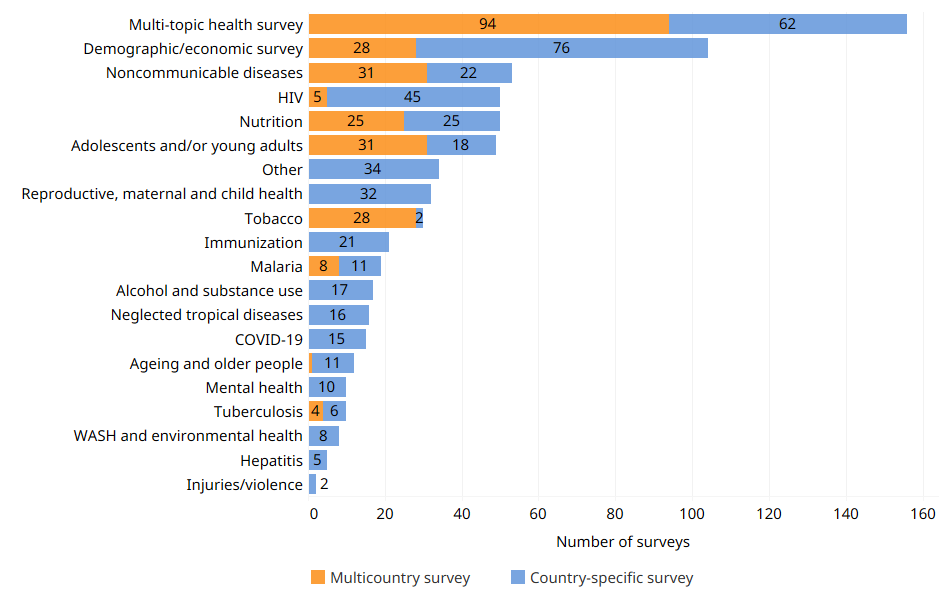
A total of 693 surveys were reported across 154 countries, corresponding to an average of 4.5 surveys per country. Seven countries did not respond to this question. Of the reported surveys, 63% were country-specific and 37% were multicountry surveys delivered via a standardized programme designed to be comparable across countries and over time, such as Demographic and Health Surveys, Global Adult Tobacco Surveys, Household Income and Expenditure Surveys, Multiple Indicator Cluster Surveys, STEPwise approach to NCD Risk Factor Surveillance, and the World Health Survey Plus. The majority were multi-topic health surveys (23%) or non-health surveys related to demographics and economics that contained health modules or health-related questions (15%) (Fig. 9). Topic-specific surveys covered noncommunicable diseases and risk factors (8%), adolescent health (7%), HIV (7%), nutrition (7%) and other topics.
Fig. 9. Number of health-related surveys reported by 154 countries conducted between 2018 and 2025, by primary health topic and type
WASH: water, sanitation and hygiene.
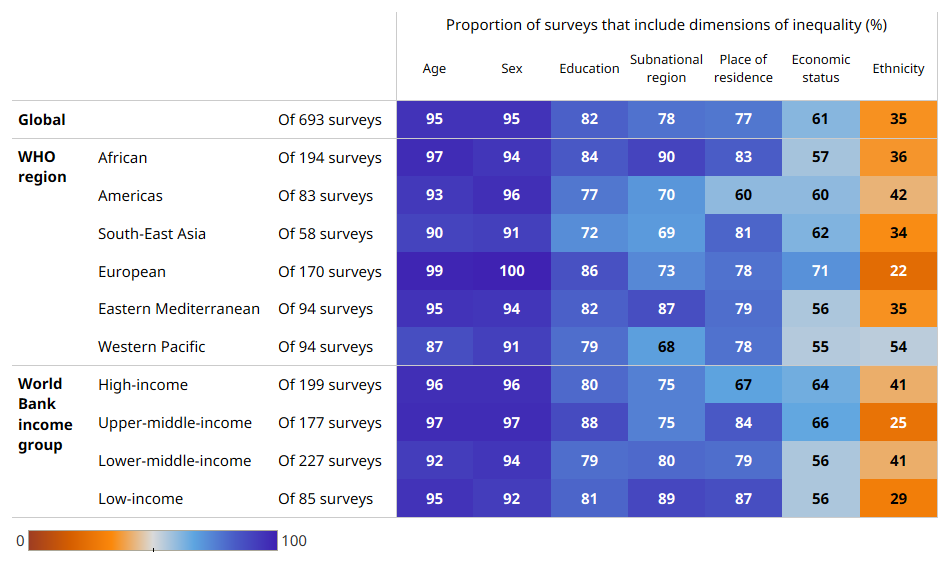
Overall, dimensions of inequality, including age, sex, economic status, education, place of residence and subnational region, were widely integrated into surveys, with age and sex being most common (Fig. 10). Economic status was collected in 61% of surveys (422 of 693), with slightly higher inclusion in surveys conducted in high-income (64%) and upper-middle-income (66%) countries compared with low- and lower-middle-income (56%) countries. See Box 8 for further information about the collection of economic status data in surveys.
Ethnicity data were collected in only 35% of surveys (246 of 693), with highest inclusion in surveys conducted in the Western Pacific Region (54%, 51 of 94 surveys). Ethnicity data are politically, legally and culturally sensitive and may not always be appropriate or permitted to collect, and therefore limited availability may reflect policy choices rather than capacity constraints.
Fig. 10. Proportion of surveys conducted between 2018 and 2025 that collected data that enable disaggregation, by dimension of inequality
Ethnicity data may not always be appropriate or permitted to collect.
Box 8. Measuring economic status via health-related surveys
Economic status can refer to current income, consumption or material living standards, each of which can be measured differently. Conceptual and practical challenges make the measurement of economic status difficult to capture in surveys. Respondents may have irregular earnings, multiple income sources, seasonal work or informal employment. Some respondents may not know their exact income or may withhold it due to privacy or social desirability concerns. The types of asset that signify higher economic status differ widely across countries. Economic status may be impacted by the macroeconomic environment, challenging comparisons not only between countries but also within the same country across time.
Several well-established approaches have been developed to enable economic disaggregation from health survey data:
Asset-based wealth indices use information on household assets, housing quality, utilities and other variables, consolidating these indicators into a single composite measure of relative wealth. The method produces wealth quintiles, enabling comparisons across population subgroups within a country. This approach is applied in Demographic and Health Surveys, Multiple Indicator Cluster Surveys and the World Health Survey Plus.
Self-reported individual or household income is suited to surveys in contexts where respondents are more likely to have stable, documented earnings. The European Health Interview Survey and EU Statistics on Income and Living Conditions include questions on disposable household income, which is then converted into equivalized disposable income per person in the household.
4.3 Civil registration and vital statistics
CRVS systems record the numbers of births and deaths within a country, providing data for fertility and mortality statistics. The WHO SCORE 2025 assessment found that only 43% of countries have a fully functional CRVS system, with lower capacity in lower-income countries (4).1 When information about dimensions of inequality is included in birth and death registration, this enables the analysis of variations in birth and death rates and causes of death across population groups. WHO recommends that sex and place of residence (subnational region) should be among the minimum information required for the registration of births, and age, sex, place of residence and marital status for registration of deaths (61). Other dimensions of inequality may be collected, depending on national and health sector priorities. Dimensions of inequality may be collected explicitly at the point of registration, derived through linkage to other databases, or derived through extrapolation (such as assigning subnational region or urban/rural residence based on the recorded address). The Atlas questionnaire assessed the availability of disaggregated data from birth and death registrations.
4.3.1 Birth registration
Of 161 countries, 142 (88%) reported collecting data about dimensions of inequality as part of birth registration (Fig. 11). Birth data that enable disaggregation were reported to be collected in 98% of high-income countries and 88% of upper-middle-income countries, compared with 80% of lower-middle-income countries and 83% of low-income countries.
Sex and subnational region were the most frequently collected dimensions of inequality in birth registration data, reported by 97% and 89% of countries, respectively. A total of 87% of countries (123 of 142) reported collecting data on both sex and subnational region. Urban/rural place of residence was captured by nearly three-quarters of countries, with lowest frequency in countries in the South-East Asia (63%) and Western Pacific (56%) regions. Information on parental education level was collected in only 37% of countries globally, most frequently in European (51%) and high-income (46%) countries. Economic status information was collected by only 12 countries, the majority of which (7 countries) are high-income. Forty-two countries reported collecting additional dimensions of inequality, including parental age (30 countries), migration status (15 countries), occupation (14 countries), ethnicity (3 countries) and religion (3 countries).
Fig. 11. Proportion of countries that reported collecting data about dimensions of inequality during birth registration, by dimension of inequality
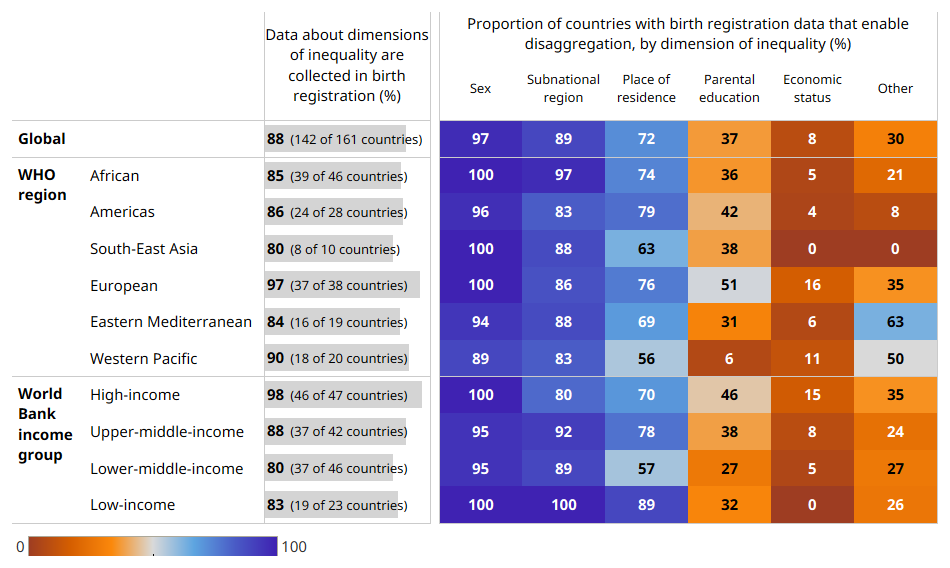
The first column shows the percentage and number of countries reporting having collected data about dimensions of inequality during birth registration. Countries that did not respond to the question (n = 9) are included in the denominator. Subsequent columns show the percentage of countries collecting data that enable disaggregation, by dimension of inequality. “Other” includes birth order, ethnicity, Indigenous status, migration status, occupation, parental age and religion.
4.3.2 Death registration
Death registrations were reported to enable disaggregation by at least one dimension of inequality in 140 of 161 countries (87%) (Fig. 12). The reported inclusion of inequality dimensions in death registrations was most common in high-income countries (98%) and least common in low-income countries (74%).
Age, sex and subnational region were reported to be included in death registration data in 81% of countries (114 of 140). Less frequently collected dimensions of inequality were occupation (45% of countries), education level (33%) and economic status (6%). Economic status was reported to be collected in only nine countries – three in each of the African, European and Western Pacific regions. Other dimensions of inequality, reported by 6% of countries globally, included ethnicity, marital status, migration status and place of residence.
Fig. 12. Proportion of countries that reported collecting data about dimensions of inequality during death registration, by dimension of inequality
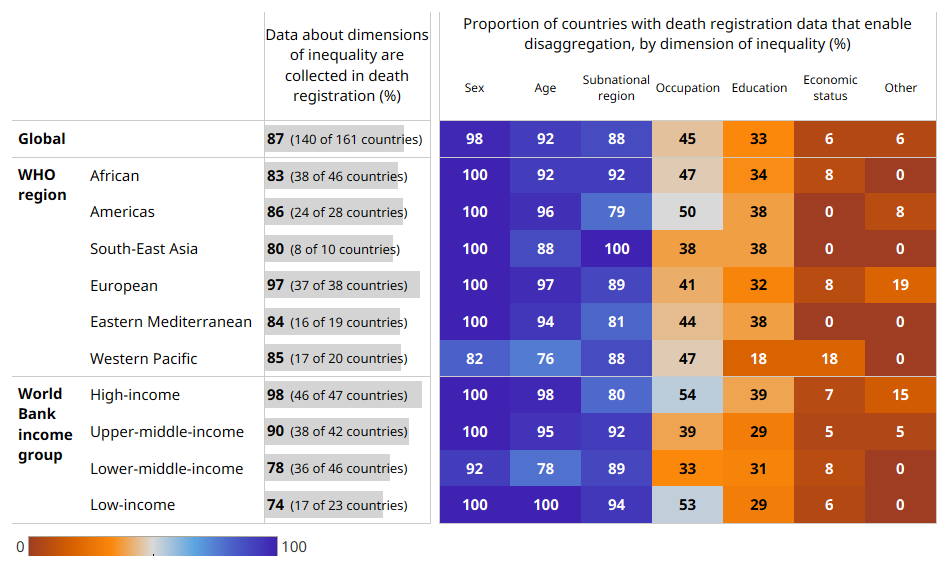
The first column shows the percentage and number of countries reporting having collected data about dimensions of inequality during death registration. Countries that did not respond to the question (n = 8) are included in the denominator. Subsequent columns show the percentage of countries collecting data that enable disaggregation, by dimension of inequality. “Other” includes ethnicity, marital status, migration status and place of residence.
Economic status and ethnicity are among the least commonly collected dimensions in CRVS systems, despite their importance for understanding inequities in fertility and mortality. Examples of countries that do collect ethnicity in birth and/or death registration are presented in Box 9.
Box 9. Examples of ethnicity collected in birth and death registration
Malaysia: the inclusion of ethnicity in birth and death registration systems in Malaysia allows birth and death statistics published by the Department of Statistics Malaysia to be broken down by ethnic group (62).
United Kingdom: as of 2024, ethnicity has been added to death registration in England and Wales (63). The birth registration system does not routinely collect ethnicity, but ethnicity of the mother is available through linking to National Health Service datasets.
Viet Nam: ethnicity is included in birth and death registration data, covering 54 ethnic groups (64). This enables analysis of differences in late birth and death registration and mean age of the mother at birth by ethnicity.
4.4 Censuses
National censuses are periodic enumerations of the population that provide comprehensive information about all people. Censuses are not usually health-focused, but some have health-related information. When demographic and social characteristics (such as age, ethnicity and sex), household and family characteristics (such as household size, marital status and sex of household head), socioeconomic characteristics (such as education and income level) and migration-related information are collected via censuses, this information can support the monitoring of health inequalities and determinants of health. The Atlas questionnaire asked whether countries had conducted a census within the past 10 years and, if so, what characteristics relevant for inequality monitoring were collected.
Of the 161 countries participating in the Atlas, 130 (81%) reported conducting a census within the past 10 years (Fig. 13). This proportion was lower in low-income countries (57%) compared with high-income countries (91%). Most countries in the Western Pacific Region had conducted a census (95%), compared with only three-quarters of countries in the African and Eastern Mediterranean regions (74%). The COVID-19 pandemic caused national censuses globally to be disrupted, postponed or altered, which may account for a reduced proportion of countries with a recent census.
Almost all reported censuses included data on demographic and social characteristics (99%). In addition, 93% collected information on household and family characteristics, 92% on education, 90% on economic characteristics, 79% on international migration and 78% on internal migration. Data on household and family, education and international migration characteristics were collected more frequently in higher-income countries than lower-income countries. Internal and international migration data were least commonly collected in censuses conducted in the Eastern Mediterranean and Western Pacific regions. Sixty-five per cent of countries (84 of 130) collected data on all six characteristics within their censuses, and 94% of countries (122 of 130) collected data on at least four characteristics.
Fig. 13. Proportion of countries that reported conducting a census within the past 10 years that includes inequality data, by characteristic collected
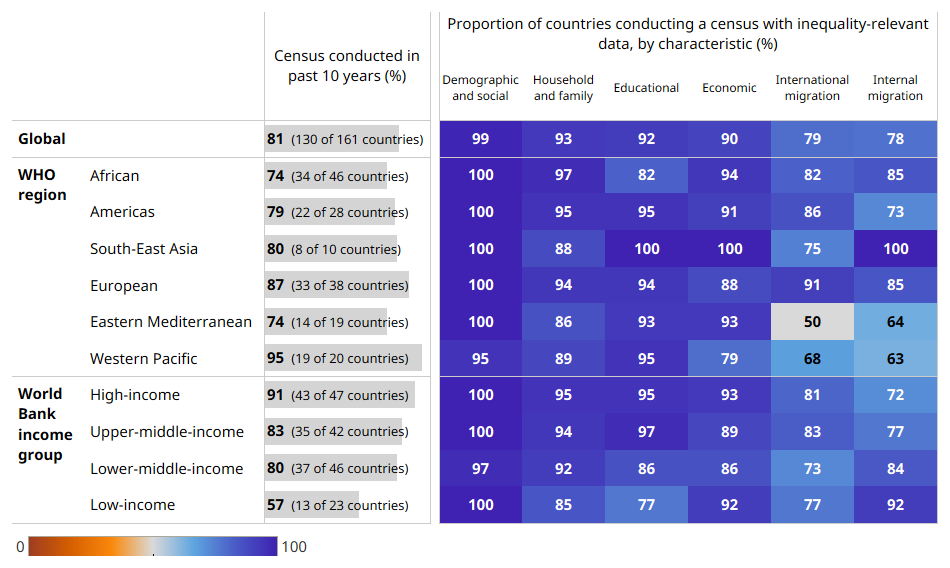
The first column shows the percentage and number of countries reporting having conducted a census. Subsequent columns show the percentage of countries that conducted a census that included data relevant for inequality monitoring.
Data collected via censuses can support health inequality monitoring in various ways. Information on demographic and socioeconomic characteristics can be linked with health data from other sources, such as health facility data, provided compatible unique identifiers exist in both sources. Country abilities to conduct such data source linking are explored further in Chapter 5. Censuses can also provide population sizes for population subgroups, which can be used as health indicator denominators. Small-area identifiers in censuses can be used to estimate the average socioeconomic characteristics of small geographic areas and to construct area-based deprivation indices (Box 10).
Box 10. Area-based deprivation indices
An area-based deprivation index is a composite measure that uses multiple indicators in small geographic areas such as districts, small neighbourhood areas or census enumeration areas to summarize levels of material and social disadvantage. It enables the identification of communities experiencing concentrated deprivation and the analysis of geographic patterns. Area-based deprivation indices can be linked with health data for the same geographic units to analyse how deprivation is associated with variations in health outcomes and service coverage.
The following are examples of area-based deprivation indices:
Australia: Socio-Economic Indexes for Areas (65).
Brazil: Brazilian Deprivation Index2 (66).
European countries: European Deprivation Index (68).
Mexico: Index of Marginalization3 (69).
United Kingdom (England): Index of Multiple Deprivation (70).
4.5 Routine health information systems
Routine health information systems (RHIS) collect health service data directly from health facilities. They can provide timely data for monitoring health inequalities, offering insights into differences in service utilization (such as hospital activity), health service provision (such as vaccination, screening and treatment coverage), quality of care (such as treatment success rates) and health outcomes (such as hospital mortality rates) among health service users. These data are often available at granular geographic levels and can be used to routinely monitor subnational inequalities. RHIS can support continuous and timely monitoring, especially where systems are supported by resilient, integrated and interoperable digital health infrastructure. RHIS data, however, capture information only on people who use health services and on facilities that report to the RHIS (which may not include private health facilities); often include limited inequality dimensions; and may lack accurate population denominators (i.e. the total population in need of services) for monitoring some health indicators, such as population coverage.
The Atlas questionnaire assessed availability of data for 12 tracer indicators commonly derived from RHIS, disaggregated by up to three routinely captured dimensions of inequality: age, sex and subnational region.
A tracer indicator is an indicator chosen as an example to represent a broader health topic.
Overall, more than 80% of countries reported producing annual statistics for 9 of the 12 indicators. The availability of national data was lower for controlled hypertension rates (58% of countries), mental health service coverage (70% of countries) and surgery rates (77% of countries) (Fig. 14). Hospital activity indicators and cancer diagnoses were available more often in higher-income countries. The coverage of DTP3, antiretroviral therapy and tuberculosis treatment was more commonly available at national levels in lower-income countries.
Fig. 14. Proportion of countries with annual statistics available for 12 tracer health indicators derived from health facility data, globally and by World Bank income group, disaggregated by age, sex and subnational region
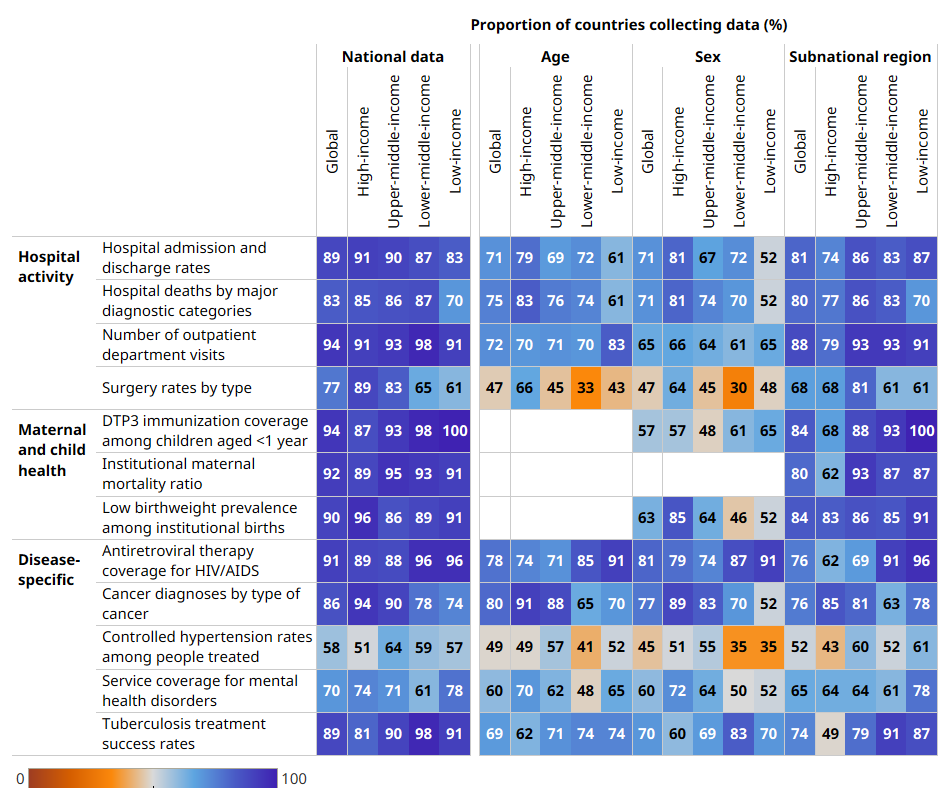
DTP3: three doses of diphtheria–tetanus–pertussis vaccine.
The numbers in the figure reflect percentages of 161 countries. Countries that did not respond to the question are included in the denominator. Blank cells show that the availability of disaggregated data was not appropriate and/or data were not collected for the indicator via the Atlas questionnaire.
Availability of disaggregated data varies by indicator, region and country income group. Disaggregation by subnational region was generally more common (52–88% of countries across the 12 indicators) than disaggregation by age (47–80%) or sex (45–81%).
High-income countries more frequently collect data disaggregated by age and/or sex for hospital admission and discharge rates, hospital deaths, prevalence of low birthweight, cancer diagnoses, controlled hypertension rates, and mental health service coverage indicators. For example, 64% or more of high-income countries reported data disaggregated by sex for at least 8 of the 12 indicators, compared with 52% or more of low-income countries. In contrast, disaggregation by subnational region and disaggregation by age and sex for antiretroviral therapy coverage are more common in lower-income countries.
The availability of disaggregated data varies across regions (Fig. 15). Disaggregation by subnational region of the 12 indicators was least common overall in the Western Pacific Region, but in the African Region data disaggregated by sex were available for 8 of 11 indicators in less than 65% of countries. Data on surgery rates disaggregated by age were available in less than 50% of countries in all regions, apart from the European Region. Data disaggregated by age and sex on controlled hypertension rates and mental health service coverage were less available in the South-East Asia and Western Pacific regions.
Fig. 15. Proportion of countries with annual statistics available for 12 tracer health indicators derived from health facility data, by WHO region, disaggregated by age, sex and subnational region
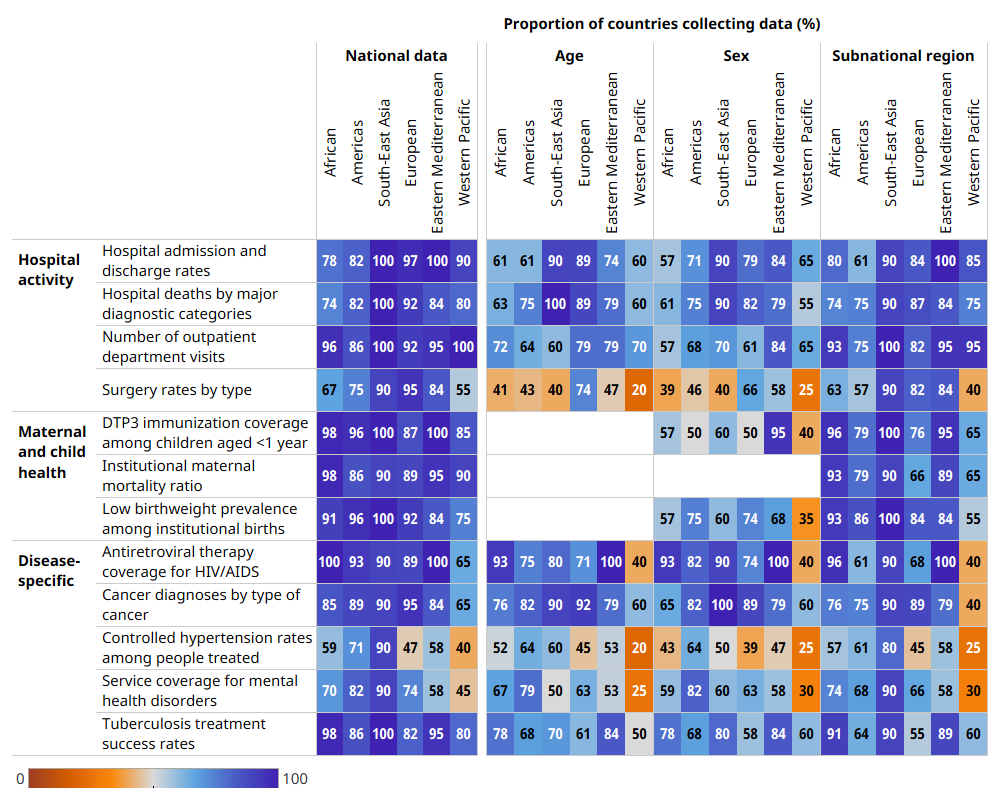
DTP3: three doses of diphtheria–tetanus–pertussis vaccine.
The numbers in the figure reflect percentages of 161 countries. Countries that did not respond to the question (n = 9) are included in the denominator. Blank cells show that the availability of disaggregated data was not appropriate and/or data were not collected for the indicator via the Atlas questionnaire.
RHIS seldom capture inequality dimensions such as economic status, education, ethnicity or migration status. The value of routine health information for inequality monitoring can be enhanced, however, by linking facility data with other data sources that contain inequality-relevant information, such as censuses and population registries, using identifiers available in both systems. Countries’ abilities to conduct such data linking are explored further in Chapter 5.
4.6 Surveillance systems
An indicator-based surveillance system routinely collects health-related data from multiple formal sources such as laboratories and hospitals to monitor known diseases and track health trends. Regular reporting of these data is normally via a surveillance or epidemiological bulletin, often published on a weekly or monthly basis. Disaggregating the data collected via indicator-based surveillance helps to reveal unequal disease burdens or patterns across areas and population groups. The Atlas questionnaire assessed the availability of data disaggregated by age, sex, subnational region and other dimensions of inequality within regular surveillance reporting.
Among the countries participating in the Atlas, 89% (144 of 161) reported having a regular epidemiological bulletin or surveillance dashboard (Fig. 16). Regional coverage ranged from 84% in the Eastern Mediterranean Region to 95% in the Western Pacific Region. In 67% of countries (96 of 144), this bulletin was available online, a practice more common in high-income countries (80%) than low-income countries (38%).
Many bulletins included some disaggregated data. Of 144 countries, 78% reported disaggregation by subnational region, 73% by age and 62% by sex. Half of countries (52%, 75 of 144) included data for all three of these dimensions. Only 45 countries (31%) reported disaggregation by a dimension other than one of these three (the types of other dimension were not reported). Overall, the inclusion of data disaggregated by age and sex was more common in high-income countries than other country income groups; it was most common in countries in the Eastern Mediterranean Region and least common in countries in the Western Pacific Region.
Fig. 16. Proportion of countries with a regular epidemiological bulletin or surveillance dashboard and proportion that include disaggregated data, by dimension of inequality
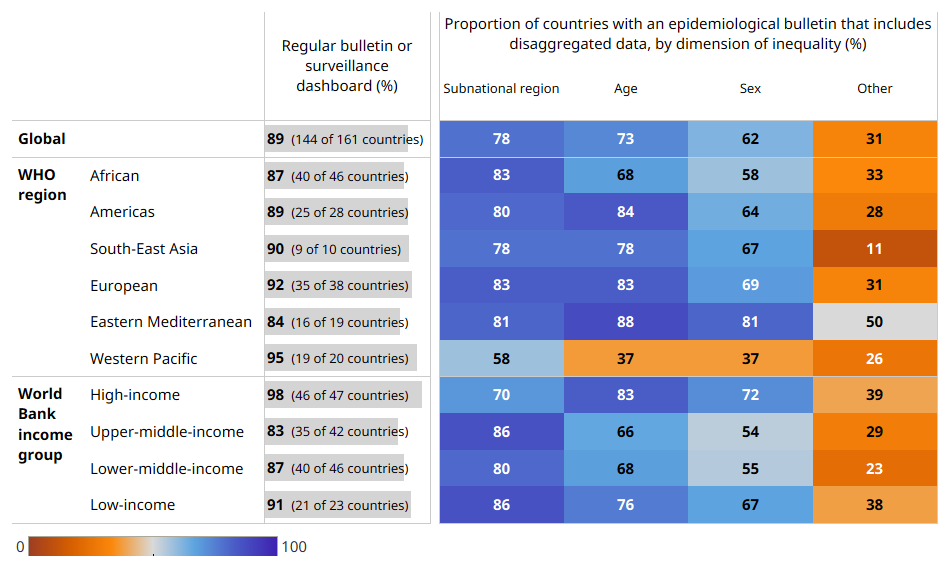
The first column shows the percentage and number of countries that reported having a regular epidemiological bulletin. Countries that did not respond to the question (n = 2) are included in the denominator. Subsequent columns show the percentage of countries whose epidemiological bulletin included disaggregation, by dimension of inequality.
4.7 Implications
Across data sources, countries reported having a solid foundation for health inequality monitoring, but important gaps in consistency and range of disaggregated health data collection remain. The quality, timeliness, completeness, reliability and representativeness of inequality data collection were not assessed. Increasing the availability of health inequality data depends on systematically strengthening and connecting existing data collection systems rather than creating systems, with a focus on collecting dimensions of inequality relevant for the country context.
4.7.1 What is working well
Population-based health surveys collect core inequality dimensions (age, sex, economic status, education, place of residence, subnational region) in most countries, making them a common data source for monitoring health inequalities, including unmet need and population experiences not captured in administrative health data. Such surveys are particularly important in low- and middle-income countries as a source of equity-relevant health data when other data sources such as RHIS have limited capacity.
CRVS and population censuses provide essential demographic, socioeconomic and geographic data in many countries. Data that enable disaggregation by age,4 sex and/or subnational region were reported to be included in birth and death registration data in more than three-quarters of countries. Most censuses conducted collect information on core demographic, social, household, educational, economic and migration characteristics.
There is overall variable availability of data disaggregated by age, sex and subnational region collected in RHIS, with disaggregation by subnational region particularly common. Disaggregation by subnational region was reported to be available in 52–88% of countries across 12 health indicators, supporting analysis of geographic inequalities among populations and health facilities captured within the RHIS.
4.7.2 Where gaps persist
Across data sources, apart from surveys, disaggregation is often limited to core dimensions (age, sex, subnational region). Data about other dimensions such as economic status, education, ethnicity, disability and migration status are available less frequently. Similar data collection limitations have been documented in other regional studies (8, 12).
CRVS data collection extends only occasionally beyond minimum dimensions of age, sex and subnational region. This limits the ability of countries to produce fertility, mortality and cause-of-death statistics that are disaggregated along other socially and epidemiologically relevant axes. As a result, inequalities in fertility patterns, survival and causes of death across other population subgroups may remain hidden in national averages. In addition, the use of CRVS data is often hindered by incomplete and unrepresentative coverage in lower-income countries (4).
Gaps exist in the collection of data that enable disaggregation via RHIS. The collection of data that enable disaggregation in RHIS is more common overall in high- and upper-middle-income countries. Data that enable disaggregation by age and sex are less commonly collected than data that enable disaggregation by subnational region, particularly in lower-income countries. In addition, coverage of RHIS data is variable and often does not include the private sector (4).
Disaggregated data are not consistently included in epidemiological surveillance. Only half of countries report epidemiological surveillance data disaggregated by age, sex and subnational region. This constrains the ability of surveillance systems to identify population subgroups at heightened risk and to monitor inequities in disease patterns and health threats in a timely manner.
4.7.3 Strategic directions for countries
Ensure relevant dimensions of inequality are collected via a national programme of regular population-based health surveys:
Establish and maintain a national population-based health survey programme that generates key health indicators and adapts to evolving health needs and epidemiological trends.
Strengthen the sustainability of survey programmes through domestic investment and cost-efficient survey approaches using established instruments and modular multi-topic designs.
Collect a core set of inequality dimensions within surveys (e.g. age, sex, economic status, education, place of residence, subnational region), with flexibility to include context-specific characteristics where relevant for decision-making.
Standardize the measurement of inequality dimensions across surveys by using consistent definitions, measurement approaches and categorizations for dimensions of inequality and population subgroups.
Design surveys with equity-oriented decision-making needs in mind and ensure survey designs are capable of producing reliable estimates for priority population groups, including disadvantaged, minority and underserved populations such as Indigenous populations, migrants, refugees, nomadic populations, remote rural communities and minority ethnic groups. Where relevant, this includes planning minimum sample sizes, oversampling, and ensuring sampling frames adequately capture underserved areas.
Where feasible, invest in longitudinal studies that follow individuals or households over extended periods to better understand how health inequalities emerge and accumulate over the life-course.
Integrate age, sex, place of residence and other dimensions of inequality, as appropriate, into CRVS systems:
Ensure universal collection of the minimum dimensions of inequality recommended by WHO (e.g. age, sex, subnational region) within birth and death registration data.
Where feasible, include additional dimensions such as economic status, education, ethnicity, occupation and marital status, aligned with national priorities for monitoring.
Strengthen CRVS to ensure people from disadvantaged, minority and underserved populations such as migrants, refugees, nomadic populations, rural communities and marginalized minorities are adequately included in birth and death registration systems.
Strengthen digital systems, interoperability and governance arrangements to improve the completeness, quality and timeliness of birth and death registration data.
Implement a census at least every 10 years that provides comprehensive inequality-relevant data:
Conduct a population census at least every 10 years, or maintain an equivalent population register, that provides data on key demographic, social, socioeconomic, education, household and family characteristics, including variables that allow the identification of socially or structurally disadvantaged groups relevant to the national context, such as migration status, ethnic and minority groups, and people with disabilities.
Include small-area geographic identifiers in censuses to support subnational analyses.
Include individual identifiers and effective governance arrangements that allow census data to be linked to other data sources.
Depending on national context and data infrastructure, consider register-based and combined census approaches to improve efficiency, reduce costs and improve the inclusion of population subgroups that may be missed or undercounted in traditional censuses.
Strengthen individual-level data collection, disaggregation and linkage within routine health information systems:
Standardize the collection of individual-level health facility data including common dimensions of inequality (age, sex, subnational region) and, where feasible, additional relevant dimensions of inequality.
Invest in resilient, interoperable and secure data and digital health infrastructure, including electronic medical records, data standards, governance arrangements and identification systems, to support high-quality data, secure data linkage (see Chapter 5) and adherence to FAIR principles (making data findable, accessible, interoperable and reusable where appropriate) (59).
Ensure continuity of core data functions during emergencies and crises to preserve critical equity-related information and support evidence-informed responses for vulnerable populations.
Report disaggregated data in epidemiological surveillance systems, where relevant and feasible:
Regularly assess surveillance systems for gaps, biases and underrepresentation of population subgroups, and strengthen approaches to improve the coverage of underserved and vulnerable populations.
Standardize the routine reporting of priority surveillance indicators by core dimensions of inequality (age, sex, subnational region).
Expand disaggregation, where relevant and feasible, to include additional dimensions of inequality and population groups at risk of exclusion.
4.8 Tools and resources
4.8.1 Surveys
World Health Survey Plus: the WHO household health survey programme is designed to generate valid, reliable, comparable and timely information on a range of health and well-being outcomes and determinants of health (71). Its survey instrument includes demographic and socioeconomic characteristics necessary for health inequality monitoring.
STEPwise approach to noncommunicable disease risk factor surveillance: a standardized method for collecting data on risk factors for noncommunicable diseases (72). The questionnaire collects information about dimensions of inequality, including age, sex, education and place of residence.
Demographic and Health Surveys and Multiple Indicator Cluster Surveys: these international household survey programmes collect data on a wide range of health indicators (73, 74). They collect data on dimensions of inequality, including age, sex, economic status, education, place of residence and subnational region, in a standardized format.
Measurement of self-reported forgone care and its reasons: towards tackling unmet health care need: includes a survey module and question set for measuring unmet health care need via surveys (75).
Model disability survey and WHO functioning and disability disaggregation tool: these survey resources provide comprehensive information about disability (76).
4.8.2 Civil registration and vital statistics
Health sector contributions towards improving the civil registration of births and deaths in low-income countries: guidance for health sector managers, civil registrars and development partners: describes key characteristics of CRVS systems and provides references to principles and standards set by the United Nations and WHO, including the minimum dimensions of inequality that should be collected in birth and death registration (61).
Handbook on civil registration and vital statistics systems: management, operations, maintenance: provides guidance on establishing a holistic system of civil registration, vital statistics and identity management, including the minimum dimensions of inequality that should be collected for the production of disaggregated vital statistics (77).
4.8.3 Censuses
- Principles and recommendations for population and housing censuses – revision 4: provides guidelines for conducting methodologically sound censuses, including definitions and specifications of topics such as demographic, socioeconomic, family, household, geographic and migration characteristics (78).
4.8.4 Routine health information systems
WHO toolkit for routine health information systems data: a collection of resources for country implementation designed to enhance the collection, quality, analysis and utilization of routine facility data (79). It includes guidance related to the disaggregation of RHIS data by age, sex, subnational region and other dimensions.
Strategy for optimizing national routine health information systems: supports countries in their efforts to strengthen their capacity to implement key interventions and optimize their RHIS (80).
4.8.5 Surveillance
- Early Warning, Alert and Response System: designed to improve disease outbreak detection in emergency settings, such as conflicts or following natural disasters (81). It provides guidance on setting up indicator-based surveillance, including the reporting of disaggregated data.
Prerequisites include a legal framework for CRVS, distribution of birth and death registration facilities, quality checking and reporting of vital statistics data, formal CRVS interagency collaboration, digital data exchange, and system performance monitoring.↩︎
Índice Brasileiro de Privação.↩︎
Índice de Marginación.↩︎
Appliable to death registration data.↩︎