3. Leadership, priority-setting and planning for action
Key findings
In 89% of countries (96 of 108), at least one national health policy was reported to include commitments to measure health inequalities. Overall, 89% of countries (117 of 132) reported that their current health sector strategic plan includes commitments to address health inequalities. This indicates that many countries view the reduction of health inequalities as an area for health system action.
There is substantial variation in how health inequality monitoring commitments are articulated. Health sector strategic plans in high-income countries more frequently included health inequality monitoring than those in low- and middle-income countries. Many policies and strategies reference the importance of monitoring inequalities, but fully developed health inequality monitoring strategies and frameworks remain uncommon and are found predominantly in higher-income countries.
65% of countries (105 of 161) reported having a central function in their ministry of health with a mandate for using data and evidence to address health inequalities.
58% of countries (93 of 161) reported having a formal collaboration mechanism between their ministry of health and partner organizations to monitor and/or address health inequalities.
3.1 Introduction
Effective national health inequality monitoring begins with leadership and political commitment to advancing health equity, followed by deliberate planning of the monitoring process. Within the health sector, this is generally anchored in two complementary layers of national decision-making: health policies that set broad commitments across the system, and health sector strategic plans that translate these commitments into concrete actions and measurable expectations (Box 3). These two components are often documented separately, but some countries consolidate them into a single framework that couples overarching vision with strategic planning.
Box 3. National health policies and health sector strategies
A national health policy sets the overarching vision for improving population health, establishing the decisions, plans and actions to achieve specific health-care goals (15). In some countries, policies may be developed for specific areas of health.
Health sector strategic plans (sometimes referred to as national health development plans) identify, sequence and time medium-term interventions for the health sector in a comprehensive way, guiding the necessary activities and investments (16).
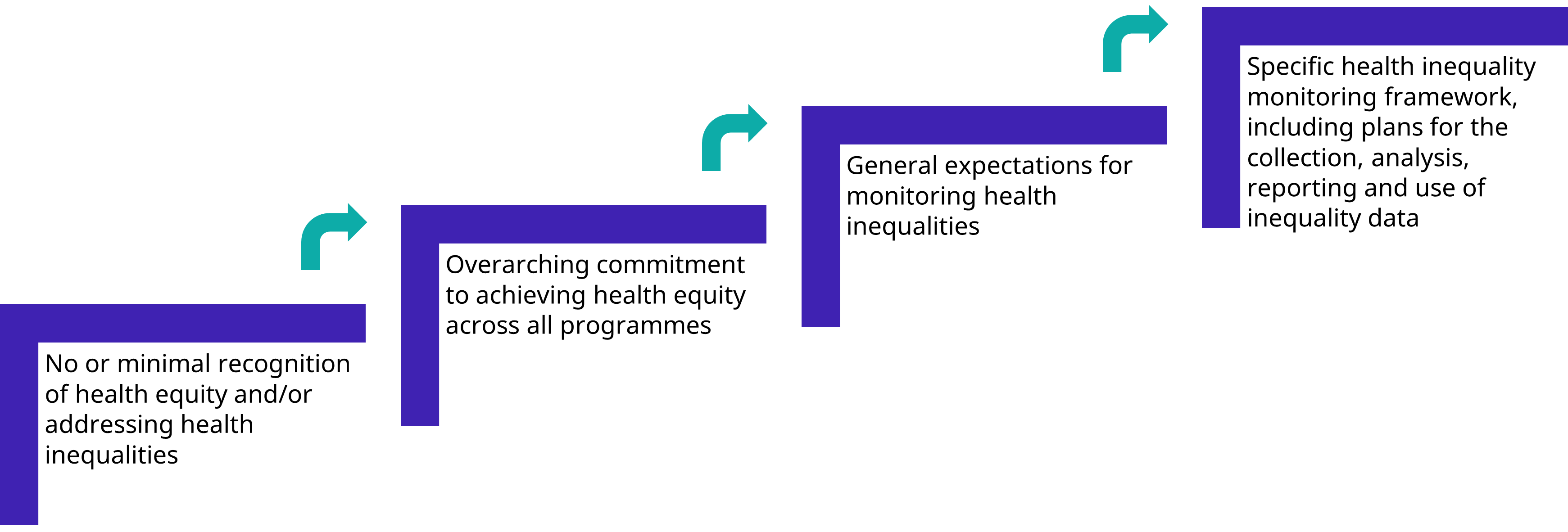
Articulating the importance of addressing health inequalities within national health policies and strategies signals recognition that persistent inequities hinder progress towards universal health coverage and broader societal well-being (16). The extent to which health inequality monitoring may be reflected in health sector policies and strategic plans may range from general commitments to the development of inequality monitoring frameworks (Fig. 4). At more advanced stages of planning, when monitoring plans are detailed and concrete, it is more likely that the necessary data will be collected, analysed, reported and used for decision-making.
Fig. 4. Strategic emphasis on health inequality monitoring within health sector policies and strategic plans
Health inequalities are shaped not only by the performance of health services, but also by socioeconomic, environmental and commercial determinants that influence health throughout the life-course (17). Unequal access to and use of digital technologies can also create or reinforce inequalities in health by affecting access to information, services and other resources for health. Therefore, addressing health inequalities also depends on clear policy and planning direction across sectors of government, such as education, social protection, the environment, labour and human rights (16).
The Atlas questionnaire assessed country commitments within their health sector policies and strategic plans related to addressing and measuring health inequalities. It also captured formal mechanisms in place within the ministry of health to use data and evidence to address health inequalities. This chapter synthesizes findings across global, regional and World Bank income group levels and highlights illustrative country examples.
3.2 Policies and strategies for health inequality monitoring
A country’s health policies and strategies play an essential role in shaping the foundations for health inequality monitoring. Through commitments to achieve health equity and plans for monitoring health inequalities, health policies and strategies guide how health information systems incorporate disaggregated data, how analytical capacity is used to monitor inequalities, and how inequality data inform and evaluate policies and programmes.
To assess this strategic environment across countries, the Atlas questionnaire asked countries to report current health-related policies published between 2018 and 2025 and their current health sector strategic plan. The questionnaire also asked whether any of these documents addressed health inequalities. The strength, enforceability, implementation, resourcing and effectiveness of these commitments were not assessed.
Across 161 countries, 108 (67%) had published at least one policy document between 2018 and 2025, and 132 (81%) had published a current health sector strategic plan.
Across 146 countries reporting these policy and strategic planning documents, a total of 390 documents were reported. There was an average of 2.7 documents reported per country within the 2018–2025 period, with higher averages in high- and upper-middle-income countries (2.9 and 3.1, respectively) than in low- and lower-middle-income countries (2.1 and 2.3, respectively). Responses reflected the broad range of health governance and strategic instruments used across health systems.
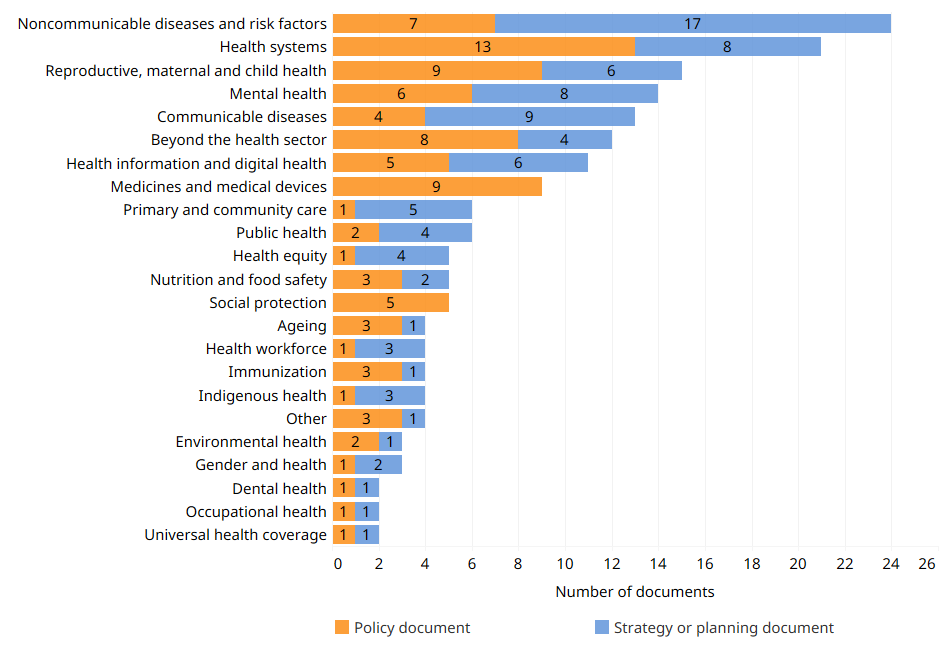
Of the 390 documents, 178 were sector- or topic-specific. Common areas included noncommunicable diseases and risk factors; health systems; reproductive, maternal and child health; mental health; and communicable diseases (Fig. 5). Twelve documents were policies and strategies from beyond the health sector, relating to topics such as human rights, gender equality, drugs and violence, and migration.
Fig. 5. Number of topic-specific health policy and strategic plan documents published between 2018 and 2025 reported across 146 countries, by topic and document type
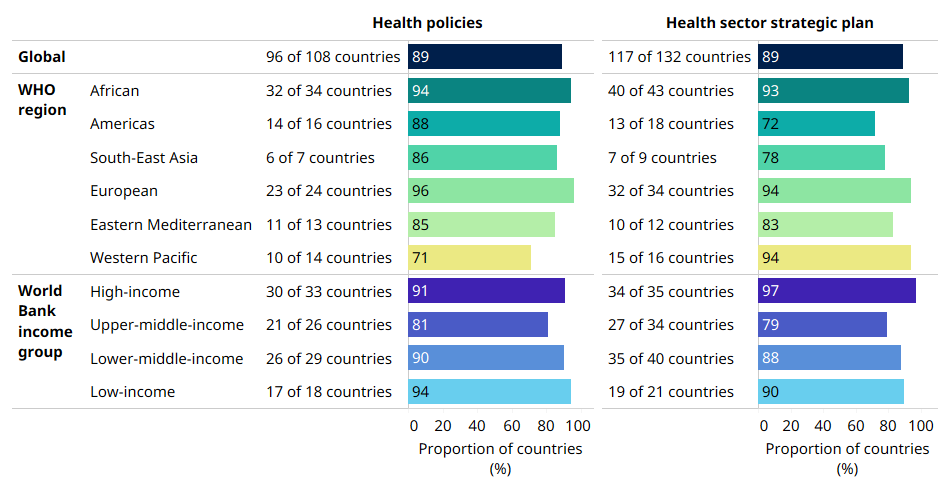
Of 108 countries, 96 (89%) reported having at least one policy document that included the monitoring of inequalities in health (Fig. 6). This proportion ranged from 71% in the Western Pacific Region (10 of 14 countries) to 96% in the European Region (23 of 24 countries).
Of the 132 countries with a published national health sector strategic plan, 117 (89%) reported having plans that included commitments to address health inequalities. This proportion was lowest in the Americas, Eastern Mediterranean and South-East Asia regions (range 72–83%), and highest in the African, European and Western Pacific regions (range 93–94%). Among the countries with published strategic plans, those in high-income countries more frequently included health inequality monitoring (97%, 34 of 35 countries) compared with low- and middle-income countries (85%, 81 of 95 countries).
Fig. 6. Proportion of countries with health policies and/or a current health sector strategic plan that include commitments to address health inequalities
Only countries reporting a health policy or strategy document are included.
Across the policy and strategy documents reported, the degree of inclusion of health inequality monitoring varied widely. In most countries, national health policies and strategies included a commitment to achieving health equity or referenced the importance of reducing health inequalities and had an overarching commitment to monitor health inequalities. Some countries had policies and/or strategies specifically focused on reducing health inequalities, with equity-focused goals and actions to address the determinants of health. Few countries have developed national health inequality monitoring frameworks that detail how health inequality monitoring is to be operationalized. These frameworks outline indicators, methods, institutional responsibilities and reporting mechanisms for health inequality monitoring (see Box 4 for examples).
Box 4. Examples of national health policies and strategies containing health inequality monitoring commitments
Examples of health inequality monitoring commitments within health policies and strategies
The Cook Islands National Health Road Map 2017–20361 has an objective of “improving evidence and information for policy-making with an emphasis on measuring equitable financing and access” under Focus area 1: strengthening health system (18).
Egypt’s National Health Strategy 2024–2030 specifies an objective of “establishing robust digital monitoring and evaluation systems to track performance indicators, assess their impact on health priorities and value-based services, and measure progress towards achieving health equity”, with Ministry of Health action to collect and analyse health data disaggregated by relevant factors (19).
Within Nepal’s National Health Policy 2019, policy number 6.23 states “demographic statistics shall be managed, researched and analysed to link them with the policy decisions and programme designing”, including strategies to collect and analyse demographic data across the lifecycle and in relation to specific population groups such as people with disability (20).
Panama’s National Health Policy and Strategic Guidelines 2016–20252 includes line of action 5.1.2 specifying the analysis of the situation, trends and inequalities related to prioritized determinants of health, and strategic objective 5.2 to develop the capacity of actors involved in the monitoring and controlling of the determinants of health (21).
Uganda’s Ministry of Health Strategic Plan 2020/21–2024/25 outlines the Ministry of Health’s responsibility for gender and equity-sensitive disaggregation of data, prioritizing the most affected and vulnerable populations in health sector planning (22).
Examples of policies and/or strategies specifically focused on inequality monitoring and reducing health inequities
Brazil’s Health Equity Promotion Policies3 are a set of government health programmes and action plans designed to promote equity and ensure comprehensive care for populations in situations of vulnerability and social inequity (23). The National Policy for Health Monitoring4 mandates the continuous monitoring of health determinants, the inclusion of vulnerable populations in surveillance systems, and the regular publication of analyses related to inequality monitoring (24).
Norway’s National Strategy for Reducing Social Health Inequalities5 sets out a systematic national approach to monitoring health inequalities, including improving the availability of data on social health differences, improving the availability of national health registry data, conducting annual public health surveys, and analysing indicators to assess how health outcomes and determinants are distributed across population groups (25).
The Republic of Korea’s Policy Directions for Enhancing Health Equity6 recommends the integration of health inequality monitoring as a core component of the country’s health policy framework, proposing that ministries and local governments set measurable indicators and inequality-sensitive targets across major health domains (26).
Spain’s Moving forward equity: a proposal of policies and interventions to reduce social inequalities in health in Spain presents recommendations to reduce social inequalities in health (27). One of its four strategic lines is to strengthen health equity information systems by including disaggregated variables within monitoring systems and monitoring social determinants indicators.
Examples of national health inequality monitoring frameworks
Angola’s National Health Development Plan 2012–20257 specifies 14 main lines of action for reducing health inequities, including the creation and maintenance of health inequality monitoring systems and the monitoring of sectoral actions in improving the health of communities (28). It includes a set of indicators for monitoring the social determinants of health equity.
Canada’s Vision 2030 for public health surveillance specifically highlights the opportunity to “adapt and develop public health surveillance systems to routinely collect, incorporate, and analyse data on social determinants of health to deepen the understanding of health inequities” (29). It recommends the building of institutional capabilities to monitor health inequalities, the development of national standards to measure health inequalities, the recording of social determinants of health data in digital health systems, and the integration of health inequality monitoring into surveillance systems.
Ethiopia’s National Health Equity Strategic Plan 2020/21–2024/25 includes a monitoring and evaluation framework with key health equity performance indicators, dimensions of inequality, data sources and monitoring frequency (30). It outlines a monitoring and evaluation coordination mechanism including supervision and inspection, reform implementation, and timely regular performance reviews of the strategic plan.
Peru’s National Multisectoral Health Policy to 20308 contains high-priority indicators including social determinants of health and living conditions and requires indicators to be monitored across multiple dimensions of inequality, including age, socioeconomic status, education, gender, ethnicity and geographic area, where data are available (31).
Sweden’s Public Health Agency established a national framework for monitoring health inequalities, developed following a 2019 government mandate to implement the country’s public health policy goal of achieving “good and equitable health” (32). The framework outlines a coordinated system for monitoring health outcomes and the social determinants of health across eight target areas, supported by a defined set of indicators, dimensions of inequality (including age, sex, country of birth, socioeconomic status and living area), guidelines for measures of inequality, and analytical reporting outputs.
In the United Kingdom of Great Britain and Northern Ireland, the Core20PLUS5 framework in England is a national monitoring strategy aimed at reducing health-care inequalities (33). The target population is the most deprived 20% of the national population as identified by the national Index of Multiple Deprivation. The framework identifies priority population groups as those that experience poorer health access or outcomes, and identifies five clinical areas of focus. In Wales, the Well-being of Future Generations Act illustrates how measurement, reporting, accountability and long-term well-being objectives can be connected through a statutory governance framework (34). It includes national indicators and milestones to monitor progress on improving health and reducing inequalities in health.
3.3 Mechanisms for using inequality data for policy and action
Strong institutional mechanisms help ensure that data and evidence are systematically used to identify and address health inequalities. The ministry of health plays a central coordinating role in this process, including in generating evidence, formulating policy options, guiding priority-setting and allocating resources. Collaboration with external partners such as universities, research institutes, national statistical offices, civil society and global health organizations can expand this capacity. Importantly, the use of data for policy- and decision-making can generate demand for more and better data, creating a feedback loop that supports continued investment in and strengthening of health inequality monitoring systems.
The Atlas questionnaire asked countries whether there was a unit or central function in the ministry of health with a mandate for translating data and evidence into policies and interventions that seek to achieve health equity. It also asked whether there was a formal collaboration mechanism between the ministry of health and national and international, governmental and nongovernmental partners to support the production of policy-relevant analysis and evidence synthesis to address health inequalities. This information reflects the self-reported presence of such mechanisms, which may be subject to differences in interpretation, and does not assess their implementation or impact.
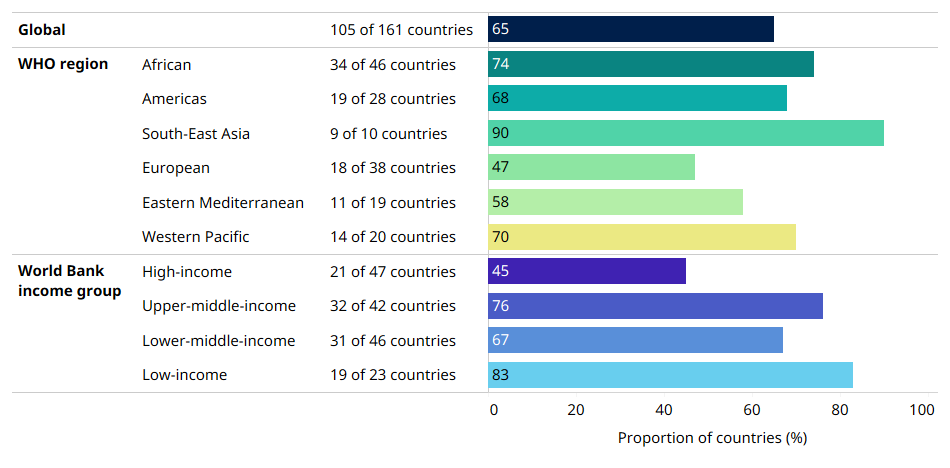
A total of 105 of 161 countries (65%) reported that the ministry of health had a unit or team with a mandate for using data and evidence to address health inequalities (Fig. 7). This was most common in low-income countries (19 of 23 countries, 83%) and least common in high-income countries (21 of 47 countries, 45%). Almost all countries in the South-East Asian Region (9 of 10 countries, 90%) reported that their ministry of health had this function. Around half of countries in the European Region (18 of 38 countries, 47%) reported having this function.
Fig. 7. Proportion of countries with a central function in the ministry of health with a mandate for using data and evidence to address health inequalities
Countries that did not respond to the question (n = 10) are included in the denominator.
Overall, 58% of countries (93 of 161) reported having a formal mechanism between the ministry of health and national partners that includes the conduct of health inequality monitoring and/or addressing health inequalities (Fig. 8). Over half of the countries in all regions except for the Region of the Americas reported having such a mechanism. Examples of this mechanism include memorandums of understanding, coordination and partnership frameworks, terms of reference for committees, and other types of formal agreement.
Fig. 8. Proportion of countries with a formal collaboration mechanism between the ministry of health and partners to address health inequalities
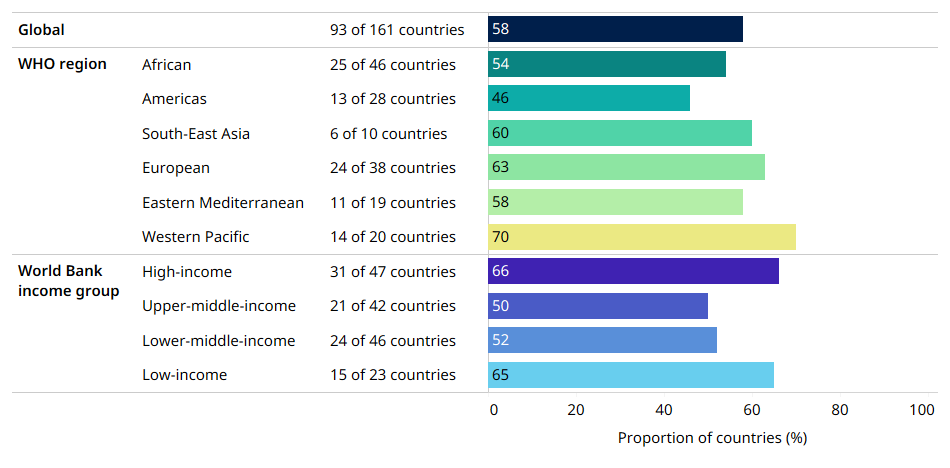
Countries that did not respond to the question (n = 11) are included in the denominator.
Addressing health inequalities requires action on the wider socioeconomic and environmental determinants of health, and therefore effective responses depend on multisectoral collaboration mechanisms (16, 17). Some illustrative examples of collaborations to address health inequalities are presented in Box 5.
Box 5. Examples of collaboration mechanisms for addressing health inequalities
Australia: the National Agreement on Closing the Gap was developed in partnership between Australian governments and a coalition representing Aboriginal and Torres Strait Islander organizations, with the objective of achieving parity in health and the social determinants of health between Indigenous and non-Indigenous Australians (35).
Brazil: the Healthy Brazil Programme9, established in 2024, is an intersectoral strategy involving 14 ministries with the goal of eliminating 11 socially determined diseases and five vertically transmitted infections by 2030 (36). The programme aims to dismantle entrenched health inequities by aligning sectors such as housing, education, environment, and Indigenous rights with national health goals.
European Region: the Joint Action Health Equity Europe was launched in 2018 with the main goal of strengthening cooperation between 24 participating countries in implementing actions to reduce health inequalities (11). Actions were categorized into five domains: monitoring, governance, healthy living environments, health systems and migration.
European Region: the WHO European Health Equity Status Report Initiative combines monitoring and analysis with scientific advisory structures, country engagement, policy dialogue and peer knowledge exchange, illustrating an approach to strengthening the connection between health inequality monitoring and policy action (37). The initiative examines health outcomes and the socioeconomic and environmental conditions that shape health and well-being across the life-course.
Kingdom of the Netherlands: the Healthy In10 programme, funded by the Ministry of Health, Welfare and Sport, works with Dutch municipalities and other stakeholders to reduce health inequalities locally (38). An expertise centre for health inequalities (Pharos) and a knowledge and network platform (Platform31) jointly provide support to decision-makers to formulate policy frameworks and workable action plans.
Kyrgyzstan: village health committees, composed of local volunteers trained by primary health-care professionals, raise population awareness of health issues and generate intelligence that can complement formal monitoring systems and support equity-oriented action at local levels (39).
Serbia: the Roma Health Mediators Programme was introduced in 2008, with the aim to improve health and access to health services for Roma populations, especially women and children, and to reduce inequalities (40). Health mediators are Roma women with at least primary education, who facilitate communication between the health-care system and the Roma community.
United Kingdom (Scotland): the Collaboration for Health Equity in Scotland is a collaboration between Public Health Scotland and the University College London’s Institute of Health Equity that aims to reduce health inequalities in Scotland through action on eight objectives related to the social determinants of health, including education, employment, standard of living, racism and discrimination, and environmental sustainability (41).
3.4 Implications
Across countries, health equity and health inequality monitoring are commonly included in national policy and strategic documents. Stronger efforts are needed, however, to translate commitments into strategic and systematic implementation. Moreover, the inclusion of equity in policies and strategies does not necessarily translate into action, sustained implementation or adequate resourcing.
3.4.1 What is working well
Health equity and health inequality monitoring commitments are widely embedded in national health policies and strategic plans: the majority of countries reported that their current policy and strategic documents have national commitments to address or measure health inequalities, although the strength, enforceability and impact of these commitments were not assessed.
Some countries have advanced from general commitments for health inequality monitoring to more structured planning: examples of dedicated health inequality monitoring frameworks show the possibilities of operationalizing inequality monitoring objectives through defined indicators, institutional roles and coordinated action.
Institutional mandates to use data to address health inequalities are established in two-thirds of countries: 65% of countries reported having this mandate within their ministry of health, signalling high-level recognition that evidence is essential for understanding which population groups are being left behind and for guiding targeted action.
Collaboration mechanisms for addressing health inequalities are in place in more than half of countries: 58% of countries reported the existence of formal mechanisms to engage partners such as statistics offices, research institutions and civil society, supporting the production and use of policy‑relevant evidence.
3.4.2 Where gaps persist
Health equity commitments are often not translated into health inequality monitoring plans: in many countries, references to health inequality monitoring within health policies and strategies remain broad, with few specifying how disaggregated data will be collected, analysed and used to inform decision‑making. This gap has been reflected in other studies, which found that few countries have a health inequality monitoring strategy in place (9, 10).
Institutional and governance arrangements for acting on inequality data are highly variable across countries: establishing and strengthening analytical and institutional foundations for equity‑oriented decision‑making is important for all countries.
Multisectoral collaboration mechanisms have not been established consistently: health inequalities arise from intersecting digital, environmental, socioeconomic and structural determinants, and therefore effective action requires mechanisms for collaboration that extend beyond the health sector. Although 58% of countries mentioned the existence of a formal collaboration mechanism with partners outside the health sector for addressing health inequalities, there is opportunity for improvement in this area for the remaining countries.
3.4.3 Strategic directions for countries
Establish a strong policy, planning and governance foundation for health inequality monitoring:
Establish or update legal and policy mandates for health inequality monitoring within health policies, health sector strategies and health information system plans.
Develop or strengthen a national health inequality monitoring framework that defines priority indicators, dimensions of inequality, data sources, analytical methods, institutional responsibilities and reporting mechanisms.
Identify and address gaps in disaggregated data and institutional analysis and reporting capacity.
Ensure sustainable financing for health inequality monitoring systems.
Invest in interoperable digital and data infrastructure, secure data access environments, and ensure equitable access to digital technologies and information.
Engage communities, particularly underrepresented populations, in the design, collection and use of health inequality data to strengthen trust, improve data quality, and ensure monitoring reflects lived realities.
Institutionalize the use of inequality data in decision-making:
Establish or strengthen dedicated functions within ministries of health to support the routine use of inequality data in policy development, planning, implementation and evaluation.
Embed the use of inequality data in priority-setting, resource allocation, programme design and evaluation.
Develop and implement national guidance on equity-oriented policy-making to help ensure policies are designed to reduce avoidable and unjust differences in health across population groups (see Box 6 for some examples).
Apply equity-focused approaches, such as health policy analysis and health equity impact assessments, to anticipate and assess the differential effects of health policies across population groups.
Strengthen analytical capacity and workforce skills to translate inequality data into action.
Strengthen accountability for reducing health inequalities:
Develop or strengthen standalone health equity strategies that identify actions to reduce health inequities and address the determinants of health, supported by monitoring frameworks to track progress in reducing inequities.
Make health sector governance documents and commitments related to addressing health inequalities publicly accessible.
Make inequality data publicly accessible to support external accountability and advocacy.
Establish regular reporting mechanisms, including public-facing reporting, on inequalities for key health indicators.
Integrate equity metrics into health system performance review, monitoring and evaluation frameworks.
Develop governance processes to ensure monitoring results are linked to corrective action, including additional research to better understand inequalities, policy adjustments and resource reallocation.
Establish and strengthen mechanisms for multisectoral collaboration to monitor the broader determinants of health inequalities:
Develop formal mechanisms for cross-sectoral collaboration between the ministry of health, national statistics offices and other sectors, such as education, environment, housing, labour, local government and social protection.
Strengthen data-sharing and data linkage governance, processes and methods across ministries and sectors to support a comprehensive understanding of drivers and outcomes of inequalities.
Implement multisectoral policy collaboration initiatives such as Health in All Policies (HiAP), ensuring the monitoring of the social determinants of health is integrated.
Box 6. Examples of national policy-making mandates and guidance for reducing health inequalities
Australia – Guidance on integrating equity into guideline development: this guidance document from the National Health and Medical Research Council outlines practical steps that can be taken to consider equity in the development of health guidelines, ensuring different outcomes and recommendations for specific population groups are considered (42).
Canada – Inventory of interventions to reduce health inequalities: to aid policy- and decision-makers, the Pan-Canadian Inequalities Reporting Initiative compiled an inventory of evidence-based interventions that have been shown to address the social determinants of inequities related to chronic disease risk factors, specifically unhealthy eating, physical inactivity, smoking and alcohol use (43).
Kingdom of the Netherlands – Towards a carefree society for all: addressing health inequalities in the transition from care to well-being11: this guidance document provides recommendations for policy-makers and practitioners on how to reduce health inequalities, with the aim of making health care, prevention and social services more accessible and inclusive, especially for vulnerable groups (44).
Spain – Methodological guide to integrate equity into health strategies, programmes and activities: produced by the Spanish Ministry of Health, this guide facilitates the integration of equity into health strategies, programmes and activities, aiming to raise awareness of health equity approaches among policy- and decision-makers and make health equity a cross-cutting action of all public health activities and plans (45).
United Kingdom (England) – NHS England’s statement on information on health inequalities: this guidance covers how health inequalities information should be used to inform local action (46). It sets expectations for National Health Service bodies for the improvement, collection, analysis and dissemination of health inequality data, and the use of information on health inequalities to take action and evaluate impact on reducing health inequalities.
3.5 Tools and resources
3.5.1 Equity-oriented policy-making
Equitable Impact Sensitive Tool: aims to create more effective and efficient health systems by incorporating equity as a key driver in health policy decisions (47).
Guidance for priority setting in health care (GPS-Health): targeted towards decision-makers who set priorities at the national and subnational levels and provides equity criteria relevant to priority-setting (48).
Health equity impact assessment tools: various tools have been developed to identify the intended and unintended health equity impacts of policies and initiatives on populations (49).
Health Equity Policy Tool: a framework to track policies for increasing health equity in the WHO European Region: supports the implementation of health equity commitments and strategies through specific policy actions (50).
Strategizing national health in the 21st century: a handbook: provides practical guidance on national health planning and strategizing (16).
Making fair choices on the path to universal health coverage: addresses the key issues of fairness and equity that arise on the path to universal health coverage by clarifying these issues and offering recommendations for how countries can manage them (51).
Tackling inequalities in public service coverage to “build forward better” for the rural poor: a policy brief that focuses on tackling rural inequalities in public service coverage (52).
Strengthening primary health care to tackle racial discrimination, promote intercultural services and reduce health inequities: outlines 14 strategic and operational levers for policy-makers to strengthen primary health care (53).
3.5.2 Multisectoral action on the determinants of health
Health in All Policies: training manual: training resource to increase understanding of the importance of HiAP among health and other professionals (54).
Implementing Health in All Policies: a pilot toolkit: brings together key tools for HiAP implementation, informed by evidence and the experiences of HiAP practice to date (55).
Operational framework for monitoring social determinants of health equity: provides a framework and guidance for national monitoring of the social determinants of health (56).
Working together for equity and healthier populations: sustainable multisectoral collaboration based on health in all policies approaches: practical advice for implementing multisectoral collaboration for healthy public policies (57).
Key policies for addressing the social determinants of health and health inequities: recommendations on practical policy options for action on social determinants (58).
Te Papa Tutara a Te Marae Ora 2017–2036.↩︎
Política Nacional de Salud y Lineamientos Estratégicos 2016–2025.↩︎
Políticas de Promoção da Equidade em Saúde.↩︎
Política Nacional de Vigilância em Saúde.↩︎
Nasjonal Strategi for Utjamning av Sosiale Helseforskjellar.↩︎
건강형평성 제고를 위한 정책 방향.↩︎
Plano Nacional de Desenvolvimento Sanitário 2012–2025.↩︎
Política Nacional Multisectorial de Salud al 2030.↩︎
Programa Brasil Saudável.↩︎
GezondIn.↩︎
Naar een zorgeloze samenleving voor iedereen: aanpak gezondheidsverschillen in de transitie van zorg naar welzijn.↩︎