Foreword
Health inequalities remain a persistent challenge in every country. Differences in health outcomes, in access to quality health services, and in the impact of determinants of health continue to hinder progress towards universal health coverage, the Sustainable Development Goals, and the aspiration of health and well-being for all.
Health inequality monitoring makes these differences visible. By revealing who is being left behind, it provides the evidence needed to design policies, programmes and investments that improve health outcomes.
At its core, this form of monitoring depends on strong health information systems that can generate, analyse, report and use data on inequalities. This requires supportive leadership, sustainable investment, skilled personnel, robust data governance arrangements, and resilient data and digital health infrastructure.
The World Health Organization (WHO) recognizes data and evidence as fundamental to improving population health and advancing equity. Through its Fourteenth General Programme of Work, WHO is committed to supporting countries to strengthen health information systems, close critical data gaps, and expand the availability and use of inequality data to guide action.
The Health inequality monitoring atlas: a global mapping of country capacities, resources, policies and practices provides a baseline assessment of health inequality monitoring capacity in 161 countries. As the first report of its kind, it positions health inequality monitoring as a core function of health information systems.
Evident from the Atlas findings is the widespread recognition of the importance of addressing health inequalities and encouraging levels of political commitment across countries. At the same time, the Atlas highlights important opportunities to strengthen governance and planning, data collection systems, analytical capacity and reporting practices.
The Atlas provides a rich summary of what is working well, where gaps persist, strategic directions for countries and relevant tools and resources. It also highlights examples from countries to showcase health inequality monitoring best practices and support knowledge exchange.
WHO remains dedicated to helping countries to build resilient, fit-for-purpose health information systems and advance their health inequality monitoring capacities. Strengthening health inequality monitoring is not an end in itself; it is a means of ensuring health systems can identify populations being left behind, respond to their needs, and track progress towards health equity over time.
I encourage all countries and partners to engage with the findings of the Atlas and use them to stimulate dialogue and action to accelerate the use of data to improve health for all.
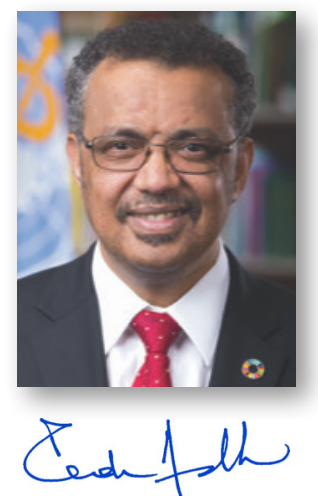
Dr Tedros Adhanom Ghebreyesus
Director-General World Health Organization